

If getting dressed feels mentally exhausting, even when you have a closet full of clothes, the issue usually isn’t effort, taste, or inspiration. It’s decision fatigue.
Many people feel overwhelmed by clothes because every outfit requires too many choices, too much self-correction, and too much second-guessing. And that mental load adds up quickly.
What the Golden Globes quietly reveal every year is something most people don’t realize: the looks that feel effortless aren’t the result of more creativity or better fashion instincts. They’re the result of fewer decisions being made in the moment.
Why Getting Dressed Feels So Draining
For most people, getting dressed isn’t a neutral task. It’s a daily negotiation.
Too many options.
Too many variables.
Too many questions about what works, what’s appropriate, and what still feels like you.
This is why people can feel overwhelmed by clothes even when their wardrobe is objectively “good.” Without structure, every outfit becomes a new problem to solve. When that happens day after day, clothing stops being supportive and starts draining energy.
This is what decision fatigue around clothing actually looks like:
- standing in front of a full closet and feeling stuck
- defaulting to the same few pieces out of exhaustion
- overthinking outfits that should feel simple
The frustration isn’t about clothes themselves.
It’s about the absence of systems.
Without systems, every decision carries weight, and when every decision carries weight, outfits start trying to do too much.
What the Golden Globes Reveal About Ease
The Golden Globes offer a clear illustration of this same dynamic.
Unlike red carpets built purely on spectacle such as the Met Gala, the Golden Globes sit in a space where credibility, authorship, and presence matter just as much as visual polish. Many looks are elegant, expensive, and impeccably styled and yet some still feel like they’re trying too hard.
Not because they’re wrong.
Because they’re over-decided.
The most effective looks do the opposite.
They don’t compete for attention.
They don’t explain themselves.
They don’t rely on excess to feel relevant.
Instead, they feel grounded, intentional, and clear, because the person wearing them isn’t negotiating decisions in real time. They’re operating within an already-defined framework.
That’s what reads as effortless.
Why Kate Hudson’s Look Worked
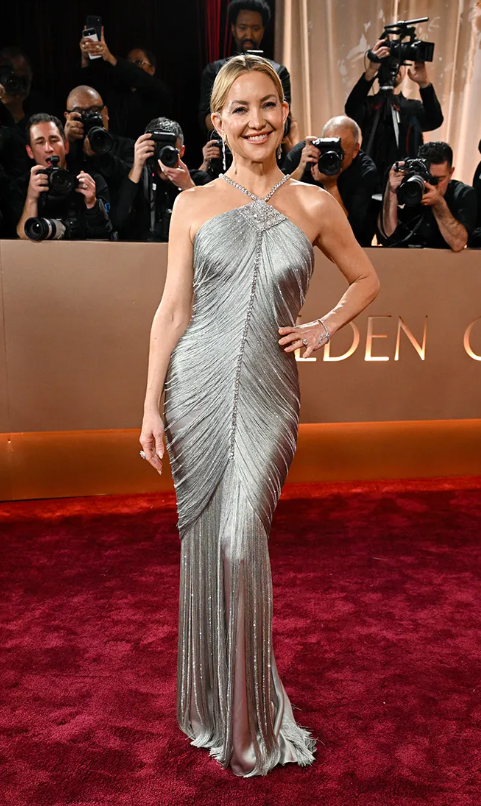
Kate Hudson’s custom Armani Privé stood out not because it demanded attention, but because it didn’t need to.
The fluid metallic texture added movement without spectacle. The silver tone felt elevated without overpowering her presence. The halter neckline created a strong, confident frame that drew the eye upward rather than outward.
Nothing about the look felt negotiable.
Nothing felt like it was trying to perform.
The story the clothes told wasn’t about trend, shock, or excess. It communicated control, confidence, and relevance without overstatement; someone comfortable being seen without needing to compete for the room.
That’s what happens when decisions are made before the moment.
Effortless Isn’t Casual: It’s Pre-Decided
One of the biggest misconceptions about effortless style is that it means relaxed or minimal.
In reality, effortless dressing comes from constraints, not freedom.
When the framework is clear:
- fewer decisions are required
- confidence increases
- energy is preserved
When the framework is missing:
- everything feels heavier
- polish doesn’t help
- more clothes create more stress
This is true on the Golden Globes red carpet and it’s true in everyday life.
Most people aren’t tired of getting dressed because they don’t care. They’re tired because they’re deciding too much, too often, without support.
What This Means Beyond the Red Carpet
The Golden Globes highlight something that shows up far beyond awards season but also in closets, in leadership roles, and in daily routines.
Style becomes easier when it stops being a daily negotiation and starts being supported by systems that reduce friction. When clothing works with your life instead of demanding energy from it, getting dressed stops feeling like work.
Effortless isn’t about having fewer clothes.
It’s about having fewer decisions.
And when that shift happens, everything feels lighter.
If you’re ready to explore what intentional alignment could look like for you, you can book a private strategy call here.
Continue the Conversation
This same lens applies beyond red carpets and events.
Our Winter Fashion Trends 2026 breakdown explores how seasonal trends function as signals and how to decide which ones are worth engaging with and which are better left alone.